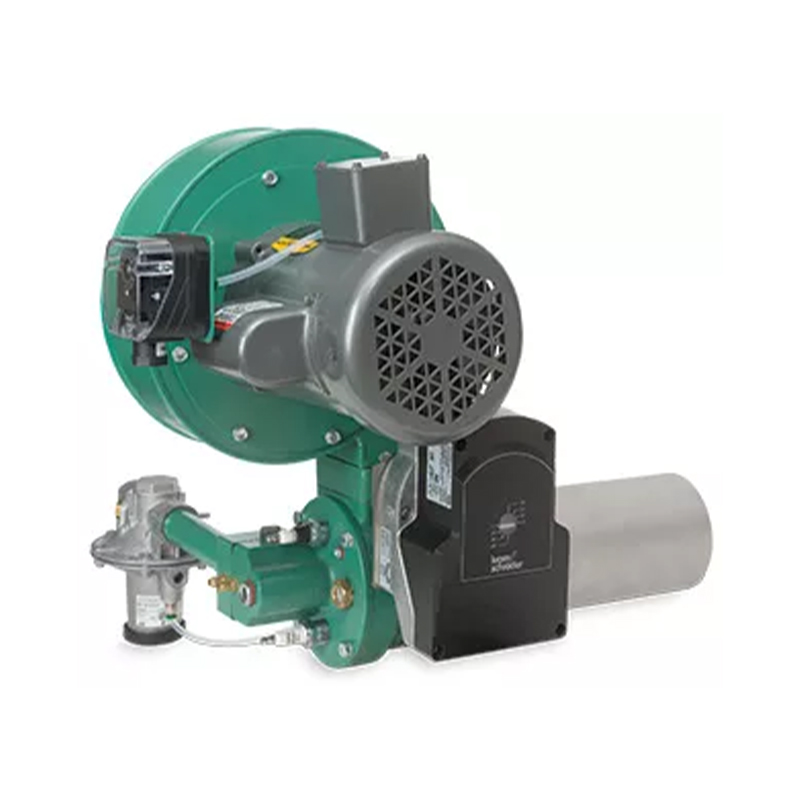
During the switching process, fuel mixing or supply interruption must be avoided to prevent the risk of explosion due to insufficient oxygen or fuel accumulation.
The internal flow field of industrial furnaces is complex, and the airflow distribution needs to be guided by a reasonable design of the furnace structure.
The system continuously optimizes the control strategy through machine learning algorithms and automatically corrects parameter combinations based on historical operating data to improve switching efficiency and combustion stability.
Adjusting the secondary air velocity can optimize the residence time of flue gas in the combustion chamber, ensuring complete combustion of unburned products and reducing the generation of fuel-type nitrogen oxide precursors.
To reduce high-frequency jet noise, a deflector or rectifier can be installed at the burner outlet to make the gas and air mix more evenly and reduce turbulence.
In industrial heating processes, the flame is not only a heat source but also a "brush" for energy transfer—its shape, length, rigidity, and diffusion angle directly determine how heat is distributed in the workpiece or furnace.